SOLSTICE
The SOLSTICE mission (Solar Occultation Limb Sounding Transformative instruments for Climate Exploration) aims to demonstrate for the first time accurate vertical profiling of atmospheric composition from a highly cost-effective and agile nanosatellite constellation.
The chemical composition of the part of the atmosphere located between 10 to 50 km altitudes is highly sensitive to global change. It is also significantly driving the evolution of the climate, through feedback processes induced by changes in gas composition. Monitoring and understanding the fine vertical distribution of gases in these regions of the atmosphere is essential to i) improve weather and climate modelling and predictions, ii) enhance anthropogenic emissions estimation, and iii) monitor the impact of human activities on stratospheric ozone recovery.
Despite the acute need for fine vertical resolution measurements, most atmospheric composition missions focus on nadir sounding for high geographic spatial resolution and only provide altitude-averaged observations, meaning the third, vertical, dimension at which the atmosphere is observed is lost. Traditionally, limb sounding missions, which complementarily observed the fine vertical structure of the atmosphere, are large, highly expensive, research missions with multi-decadal development cycles, leading to significant observation gaps, and a missing untapped rich dataset to develop novel downstream products.
SOLSTICE addresses this gap by providing for the first time a science-grade high vertical resolution atmospheric data product in an extremely cost-effective manner. It does so through the development of highly miniaturised innovative payloads, commercially scalable, and suited for deployment from nanosatellite platforms. It therefore unlocks affordable constellation flight for enhanced geographical coverage, hence providing a truly 3D atmospheric composition product.
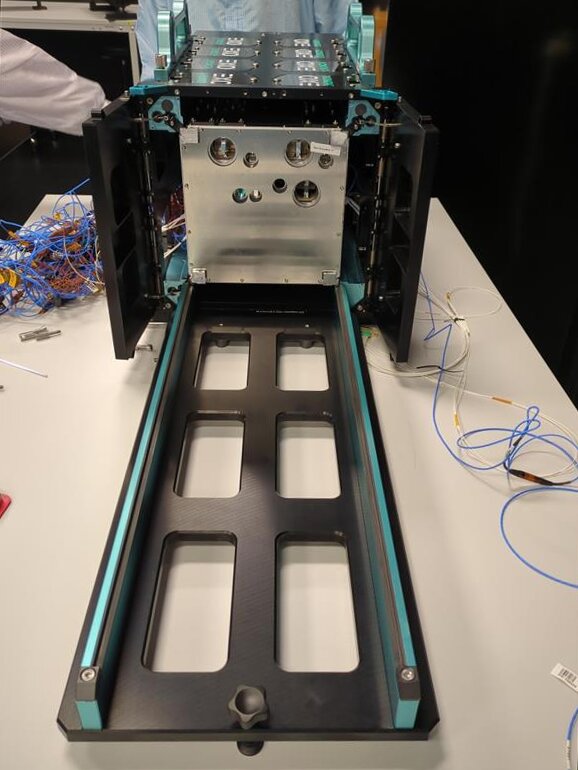
SOLSTICE has been developed and matured through ESA support (CubeMAP SCOUT-1 mission) and support from the UK Centre for Earth Observation Instrumentation.
 Previous Post
 Next Post