Mid Infrared Photonics – Germanium on Silicon structures for spectroscopic sensing
This project is the latest addition in a programme of work to develop miniature mid-infrared (MIR) gas sensors using novel waveguides. Previously, ultrafast laser inscription (ULI) had been used to inscribe waveguides and volume gratings in chalcogenide glass, but in this project high refractive index contrast germanium-on-silicon (Ge-on-Si) waveguides are explored. The group has formed a collaboration with the University of Southampton who have advanced knowledge and expertise in the design and fabrication of these devices. Alongside this, we have designed a miniature gas cell which has been manufactured in-house to demonstrate the waveguides’ sensing capability.
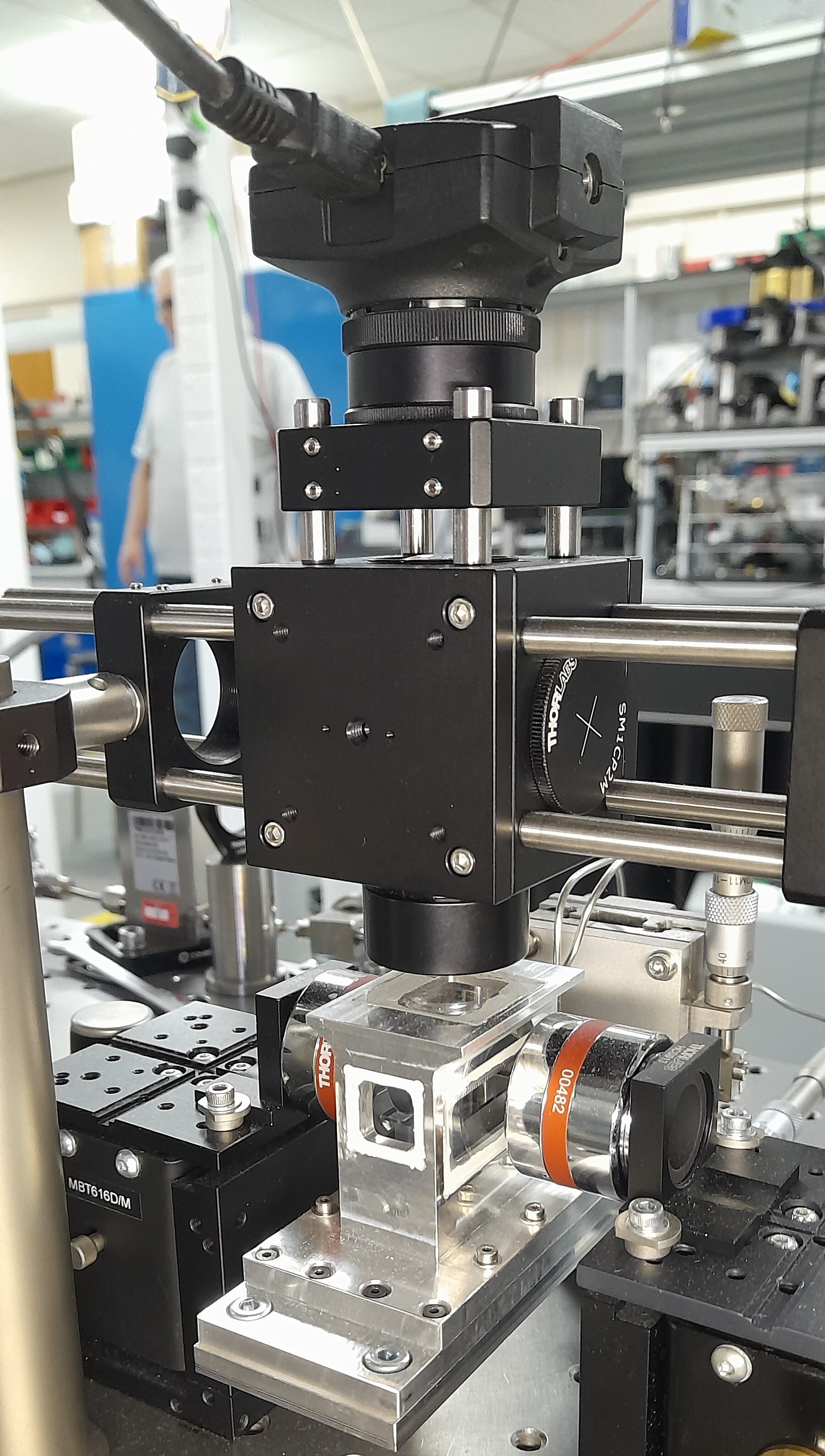
Silicon based platforms have been highly researched due to the ability to be applied in integrated photonic devices; however, this has been mostly limited to the near-infrared (NIR) wavelengths for use in telecommunications. Interest in integrated MIR photonic devices has increased owing to the prospect of miniature, low-cost environmental sensors. As silicon dioxide is absorptive in the MIR wavelengths, other silicon-based platforms have been explored, including Ge-on-Si.
Owing to their very high refractive index contrast, extremely small bend radius waveguides with low loss can be achieved, leading to longer pathlength structures with a small device footprint. We have designed an array of waveguides and novel structures based on existing knowledge of our collaborators and driven by the groups advanced modelling capability using finite element analysis models. We will demonstrate the waveguide performance by detecting samples of methane.
 Previous Post
 Next Post